01.
Sources and fetchers
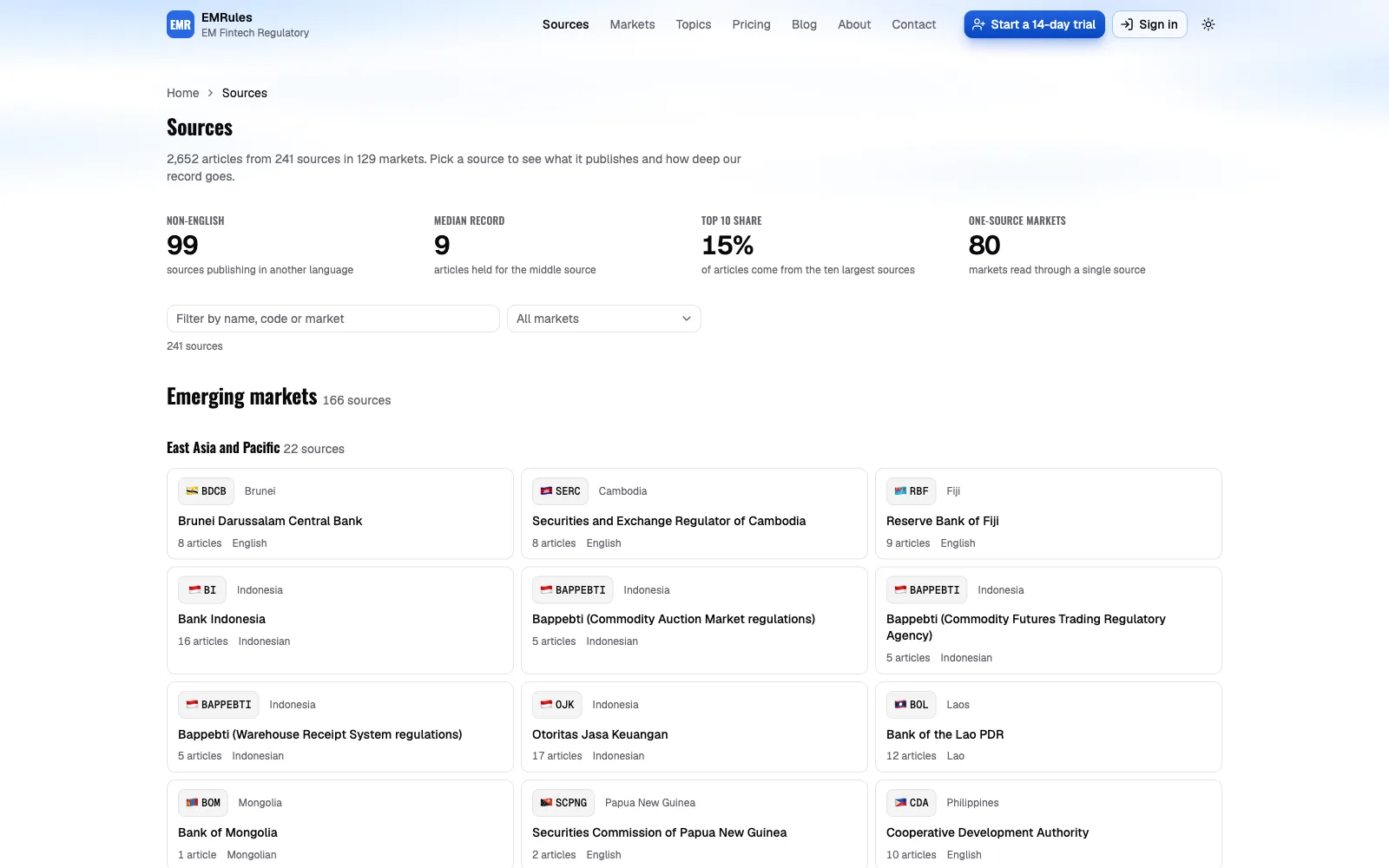
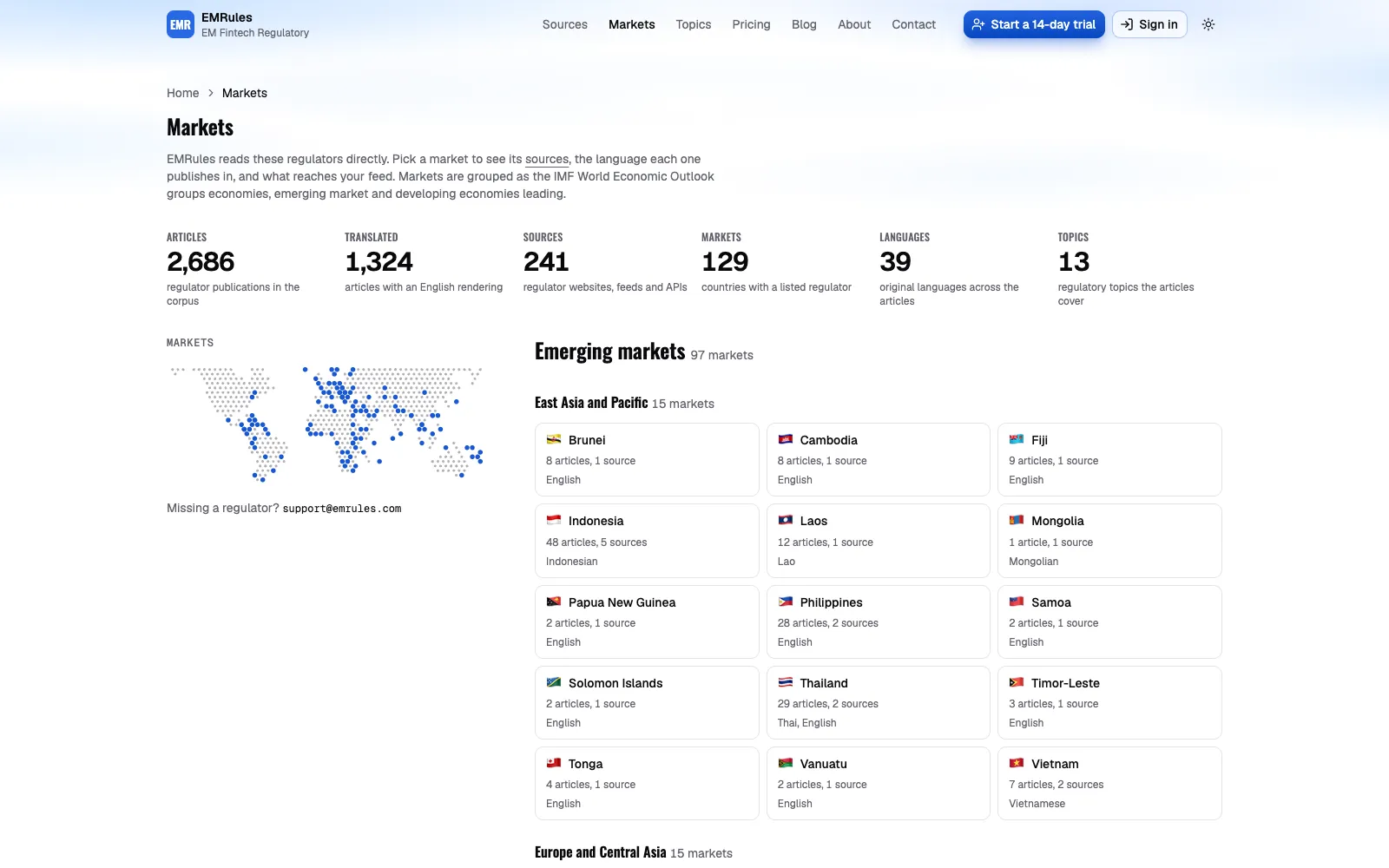
Fetchers work in tiers, from an API to an RSS feed, a plain HTTP page and, last, a headless browser, so a regulator with no feed or API is still read where it publishes.
// RegTech · 2026
// The Brief
// Background
Compliance, legal and expansion teams at fintechs licensed in more than one emerging market answer to every central bank and supervisor there, each publishing in its own language and format.
We built every layer: tiered fetchers for each regulator, an AI pipeline that extracts and translates each document, and a platform with plans, a REST API and an MCP server.
Live at emrules.com, reading each regulator where it publishes every 24 hours, with English beside the original and a 14-day trial over the API or MCP that needs no card.
// Challenges
Each regulator publishes through a channel of its own: a website, an RSS feed or an API.
Some regulators publish no feed or API, so their pages must be read the way a browser does.
Every document has to reach the reader in English, with the original kept beside it.
Every AI run has a cost, so spend must be tracked per run and stopped when it runs away.
Usage has to be metered and billed by plan, with limits enforced on every request.
// Value delivered
One English feed of rules and notices, with the original publication beside each article.
A feed teams can narrow by document type, regulatory topic and credibility score.
A REST API and an MCP server, so code and AI agents read the same feed with one key.
Plans with usage billing, rate and quota limits at the API edge, and a no-card trial.
A cost ledger on every pipeline run, with a circuit breaker that can halt it.
// Inside the Product
Each part of the product in turn: what it does for the people who use it, how we built it, and the real screens where it runs.
Fetchers work in tiers, from an API to an RSS feed, a plain HTTP page and, last, a headless browser, so a regulator with no feed or API is still read where it publishes.
An agentic pipeline built with LangChain and LangGraph extracts each publication into a structured record, summarises it and translates it to English. The reader sees the English beside the original, which prevails wherever the two differ.
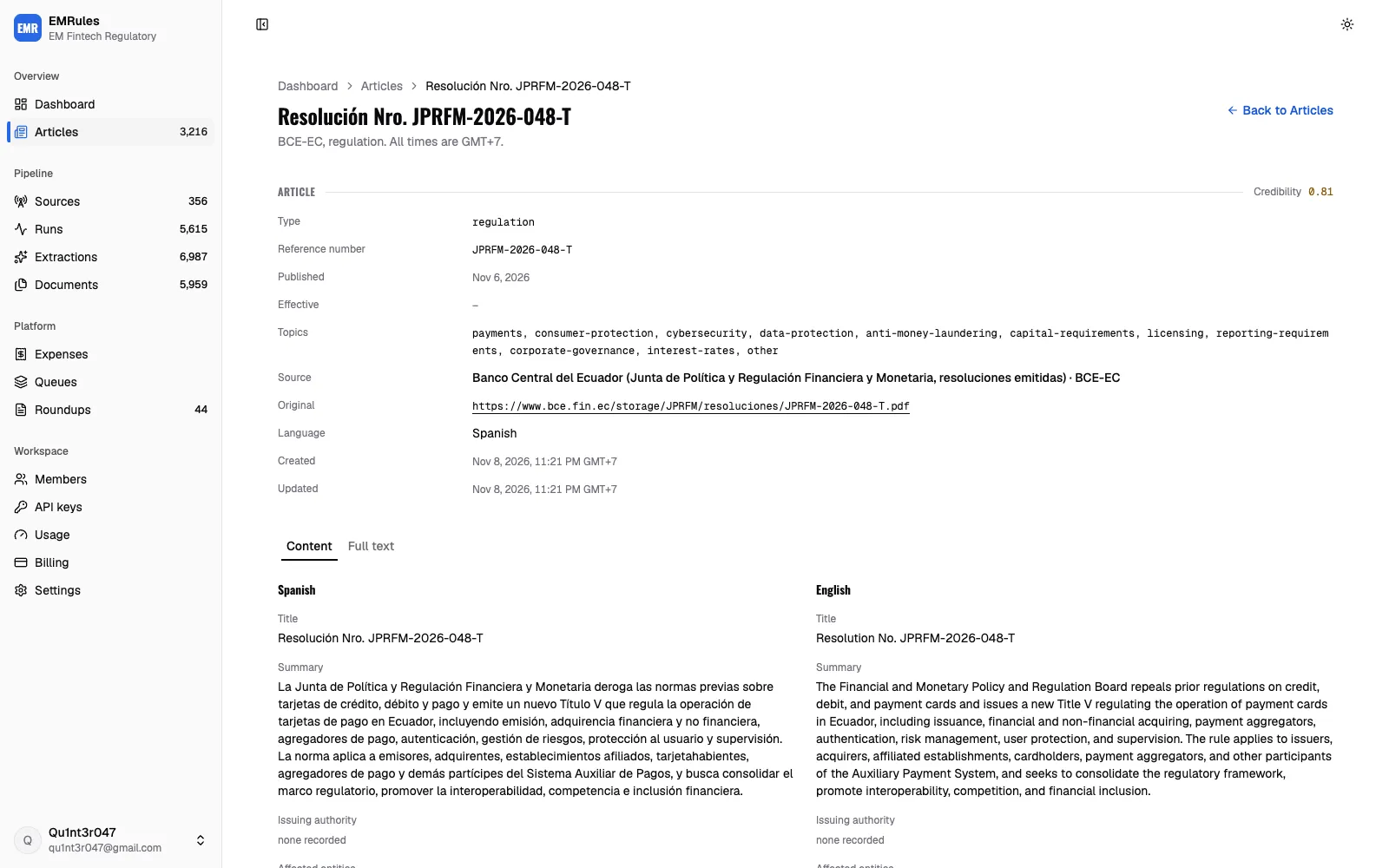
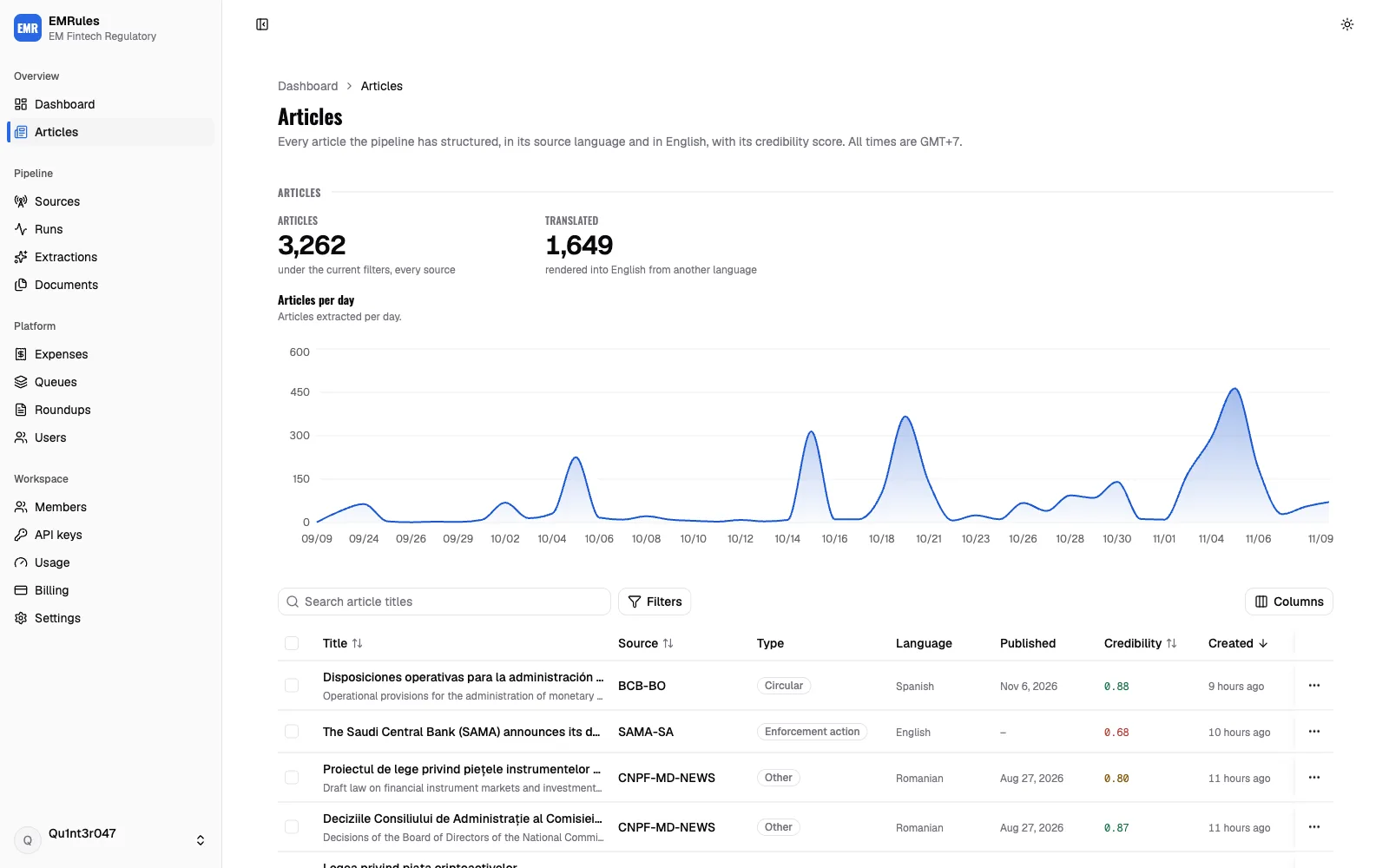
Each article is classified by document type, from regulation and circular to enforcement action and press release, given a credibility score and tagged by regulatory topic, so a team can filter the feed to what it must act on.
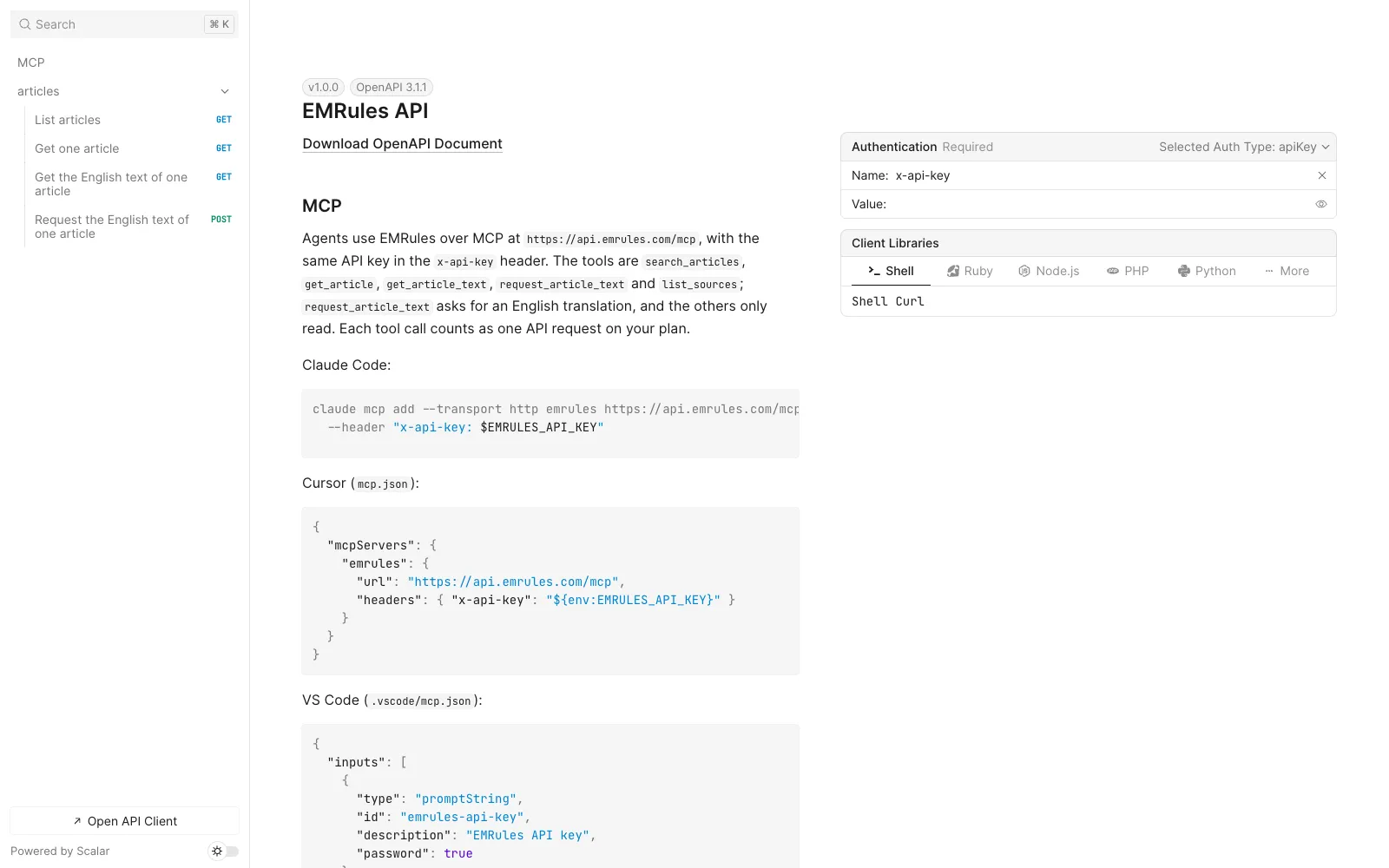
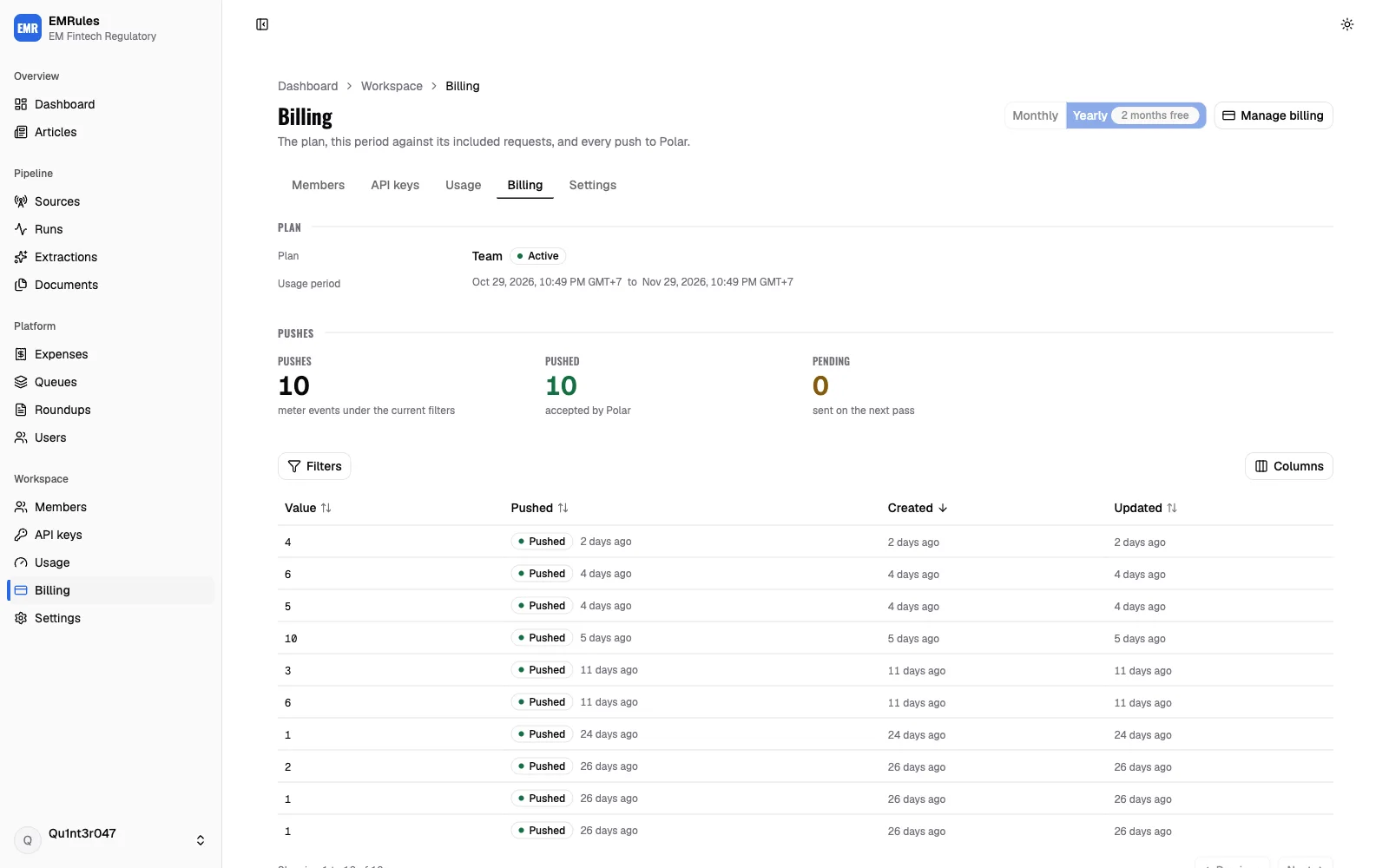
A REST API and an MCP server serve the same feed with one key, to code or to agents in Claude, Cursor and GitHub Copilot. Plans bill by usage, with rate and quota limits at the API edge.
// Under the Hood
Your engineers can judge the build for themselves: the languages and frameworks the product runs on, and the services, platforms and tools it connects to.
// Technologies
// Integrations
// See It Live
See the work running outside this case study: each link opens the live product or one of its public pages in a new tab.
Tell us what you're building and where it stands. We'll scope it with you on a call and give you a straight answer on fit.
Pick a time on our calendar and tell us what you want to build.
Together we name the users, the first release and what success looks like.
We send a written plan with the scope, the steps and the engagement that fits.
We begin with Discovery and show you working software early and often.